What is a speculative industrial building, and why it matters for your shortlist
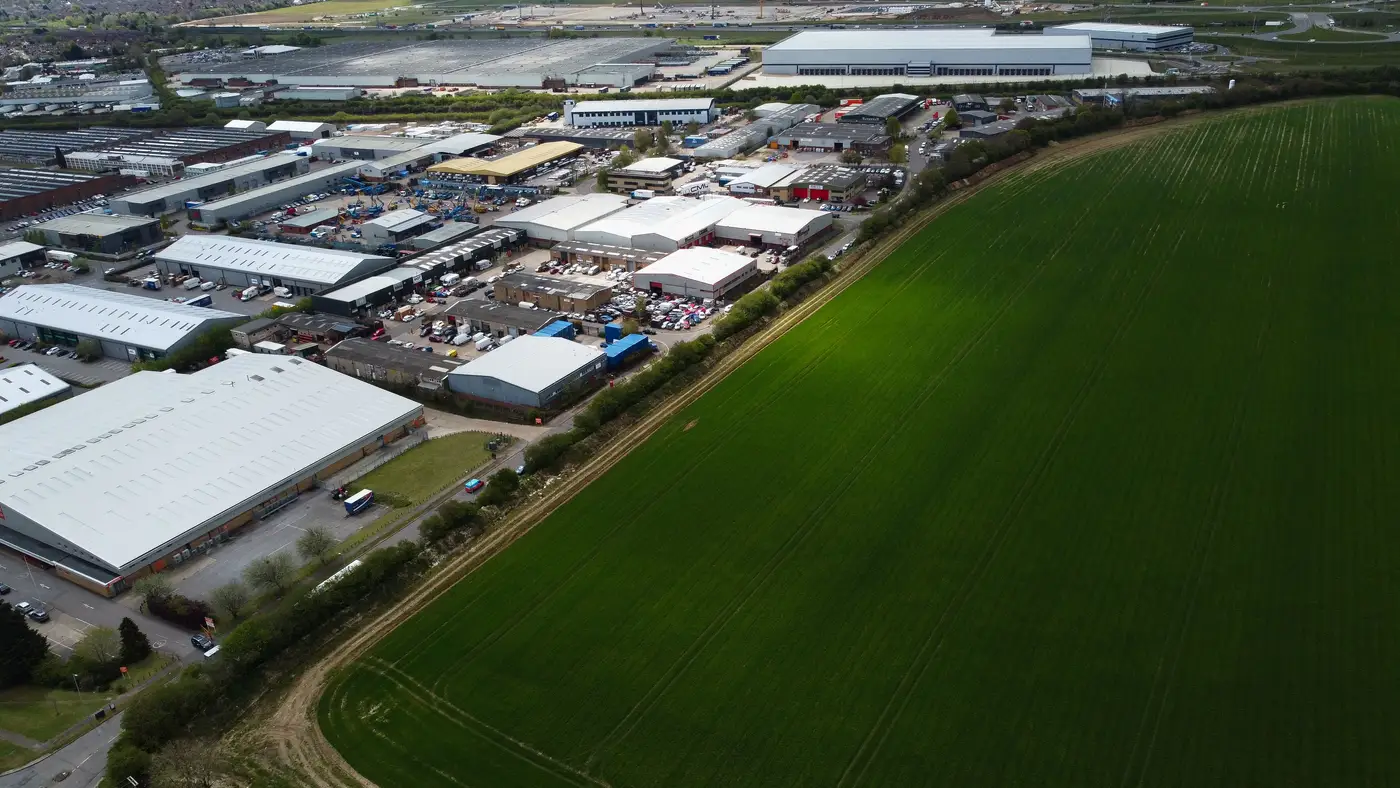
A spec building, short for speculative, is a warehouse or distribution facility a developer breaks ground on without a signed tenant. The developer is betting the submarket will absorb the space within 12 to 24 months of delivery, give or take. A build-to-suit works the opposite way: a tenant signs first, and the building gets designed around that tenant's dock count, clear height, and trailer court before anyone pours a slab.
For a network strategy manager building a shortlist, the difference isn't academic. It changes your timeline and the risk you're taking on with the parcel underneath the building.
Spec building vs build-to-suit: what actually changes for you
Lease into an existing spec building and you take the shell as it sits, whatever clear height, column spacing, and dock count the developer guessed the market wanted. You move fast because the building is finished or close to it. You give up say over the specs.
A build-to-suit gets you the exact configuration you need, down to the refrigeration infrastructure on a cold-chain facility, but you're on the developer's construction calendar. From site control to occupancy on a build-to-suit cold storage facility, 18 months isn't unusual.
Most networks run both plays in the same market at the same time. Spec fills a near-term gap or tests a lane before you commit to volume. Build-to-suit anchors the lane once the volume is already committed.
Why it matters before you drive to the parcel
Two parcels can look identical on a zoning map and still sit on completely different paths depending on whether the developer behind them is building spec or building to suit. Speculative distribution building site selection tends to favor parcels with fast entitlement, interchange visibility, and a land-cover profile that doesn't need much grading, because the developer is carrying the building cost before a tenant signs and wants the construction side de-risked.
If you're the tenant walking into that spec space later, the same speed cuts against you. You get into the market quickly, but you inherit whatever the developer traded off to get there fast: an access road sized for the current tenant mix, or a parcel boxed in by wetlands with no room to expand the yard in three years.
A shortlist a broker labels "spec availabilities" is a signal about the site itself, carrying the developer's bet baked into the dirt. Ask what drove the site pick. Speed to permit tells you one thing about what you're buying into. Long-term access and expansion room tells you another.
A few things worth confirming on each candidate before you spend a travel day on it, spec building or build-to-suit:
- Road access that can carry the trailer count you're planning to run, checked against what's actually parked there today.
- Logistics activity already clustered nearby. That usually means the submarket has solved for truck routing, labor draw, and utility capacity. An isolated parcel might mean cheaper land and a longer runway to get everything else in place.
- Usable acreage once you net out wetlands, floodplain, or tree cover a "shovel-ready" listing doesn't mention.
None of that needs a site visit to start answering. A current satellite pass over each candidate shows the access roads, the land cover, and the logistics density already on the ground, which is roughly what Distribution Siting checks before you commit travel budget to a shortlist.
Run your next batch of candidates through that check before you book the flights.